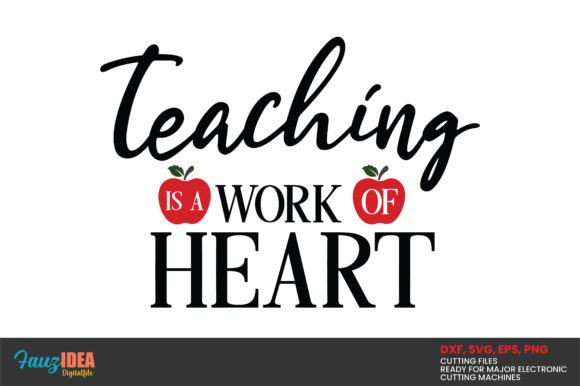
Teaching Work Heart: A Designer's Review for Real Projects
As a designer who spends more time at the hoop than away from it, I approach every new embroidery file with a critical eye. It is not enough for a design to look cute on a screen; it must translate beautifully into thread, withstand the tension of the machine, and hold up on the final finished product. Recently, I evaluated the Teaching Work Heart design to see if it holds up under the scrutiny of real-world application. This isn't just a graphic; it is a potential asset for your craft business, whether you are making custom apparel for teachers or creating digital assets for other makers.
First Impressions and Visual Personality
When I first pulled up the Teaching Work Heart file, the immediate impression was one of warmth and professional appreciation. The theme strikes a perfect balance between affection and respect, making it ideal for the education sector. Visually, the layout feels open and breathable, which is crucial for embroidery. Designs that are too cluttered often turn into a muddy mess of thread once stitched. This design, however, seems to have enough negative space to allow the fabric texture to show through, preventing that heavy, cardboard-like feel that cheapens a handmade product.
The mood it creates is inviting. It speaks directly to the heart of educators, making it a natural fit for personalized gift items. Whether you are aiming for a modern boutique aesthetic or a classic school spirit look, the visual personality of this design is versatile enough to adapt. For those selling design assets or Graphics in the Crafts category, this kind of universal appeal is gold. It avoids overly trendy elements that might date quickly, ensuring longevity for your inventory.
Real-World Application Scenarios
To truly test the viability of Teaching Work Heart, I imagined a specific project: a custom order for a local elementary school's end-of-year teacher appreciation event. The client wanted sweatshirt embroidery for the staff and matching tote bag design options for their classroom supplies. This is where the rubber meets the road.
On a mid-weight cotton blend sweatshirt, this design would likely shine. The heart motif provides a soft focal point on the chest or sleeve. Because the design is intended for printing and cutting as well, it offers flexibility. If a customer wants a vinyl heat transfer instead of stitching, the included SVG and EPS files handle that transition smoothly. However, as an embroiderer, my focus remains on how the threads lay. For a baby embroidery project, perhaps on a onesie for a teacher's own child, the scale would need to be reduced. The clean lines suggest it could scale down well, provided the smallest details don't get lost in the stitch count.
I also considered its use on an embroidered patch. Patches are huge right now for Etsy seller shops and boutique branding. If digitized correctly with a satin stitch border, Teaching Work Heart could become a collectible item for teachers to swap or display on lanyards and bags. The simplicity of the concept works in favor of the patch format, where complex shading can sometimes fail.
Navigating Fabric and Hoop Challenges
Every designer knows that the fabric dictates the success of the stitch. While Teaching Work Heart appears robust, there are scenarios where caution is required. If you are working with stretchy fabrics like jersey knits for t-shirts, you must be vigilant about using the correct stabilizer. Without proper backing, even a well-balanced design can pucker, distorting the heart shape and ruining the visual appeal.
Textured fabrics present another challenge. On a waffle knit or a heavy towel, fine details can get swallowed by the loops of the fabric. If you plan to use this on kitchen towels or blankets for holiday embroidery gifts, I recommend running a test stitch on a scrap piece of the exact same material first. Check the stitch density. If the design relies heavily on dense fill stitches, it might become too stiff for a comfortable garment. Conversely, if it utilizes running stitches or lighter fills, it will drape much better.
Curved surfaces, such as caps, require special attention. Placing a heart design on the front panel of a hat can be tricky if the design is too wide. You need to confirm the hoop size compatibility before committing. A design that looks perfect flat might warp when stitched over the curve of a cap brim. Additionally, dark fabrics require careful selection of thread colors. A light-colored heart on a navy blue polo needs high contrast to maintain readability. Always view your mockups in black and white to ensure the silhouette holds up without relying on color alone.
Building Brand Value and Customer Trust
Why does the quality of a single file matter? Because it reflects on your brand. When a customer buys a small shop product featuring Teaching Work Heart, they are buying trust. If the stitching is crisp, the edges are clean, and the design survives multiple washes, that customer returns. If the design pulls apart or looks amateurish, you lose that trust forever. High-quality commercial embroidery relies on files that are optimized for clarity.
This design has the potential to elevate your printable mockup presentations as well. Clean vector lines in the SVG and DXF formats mean your digital previews will look sharp, increasing buyer engagement on platforms like Etsy. Professionalism in your listing images starts with the quality of the source file. A design that translates well from screen to stitch ensures that what the customer sees is exactly what they get, reducing returns and boosting satisfaction.
Practical Notes for the Serious Maker
Before you start stitching or selling, here are my top recommendations for working with this file:
- Test on Scraps: Never run a new design on a final garment without testing it on a scrap of the same fabric and weight.
- Check Licensing: The product description states the file can be used for printing, cutting, and designing, with no watermark. However, always double-check the specific license terms regarding commercial resale of the digital file versus the physical finished item.
- Inspect Small Details: Zoom in on the digitized version. Look for tiny lettering or intricate corners that might cause thread breaks.
- Stabilizer Selection: Match your stabilizer to the fabric. Cut-away is usually best for stretchy garments, while tear-away works for stable woven fabrics like tote bags.
- Thread Contrast: Experiment with thread colors. Sometimes a tonal look (dark red on maroon) looks sophisticated, while high contrast (white on black) offers maximum visibility.
- Verify Formats: Ensure your machine reads the specific embroidery file format provided, or that you have the software to convert the SVG/DXF if you are digitizing it yourself for embroidery.
In conclusion, Teaching Work Heart shows strong promise for a variety of applications, from apparel decorators creating staff uniforms to hobbyists making gifts. Its strength lies in its clear theme and adaptable layout. By respecting the limitations of your materials and taking the time to test, you can turn this digital asset into a tangible product that brings joy to educators and value to your business. Remember, the best designs are the ones that disappear into the fabric, leaving only beauty behind.