Happy Holla Days: A Designer's Review for Holiday Stitching
As a designer who spends more time staring at stitch simulations than actual holiday decorations, I approach every new digital embroidery file with a mix of excitement and skepticism. The market is flooded with seasonal graphics, but few translate well from a screen to a finished product. When I first encountered the Happy Holla Days design within the Crafts and Graphics category, my immediate reaction was to look past the novelty of the pun and assess its viability for real-world application. This isn't just about whether the text is funny; it's about whether the layout, density, and flow will hold up on a sweatshirt, a tote, or a boutique item intended for sale.
First Impressions and Visual Personality
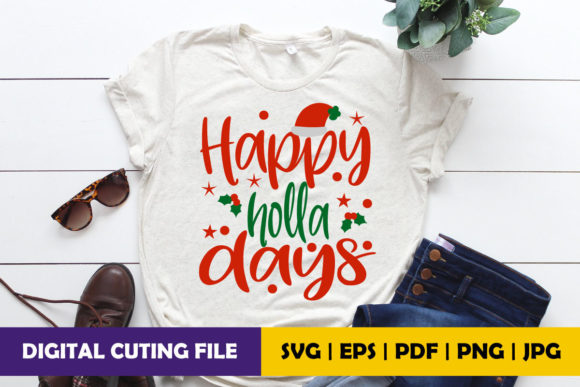
The initial visual impact of Happy Holla Days is undeniably cheerful. It captures that specific mid-winter mood where we are tired of the cold but still want to celebrate with a wink. From a layout perspective, the typography appears balanced, suggesting a design that prioritizes readability without sacrificing style. For an embroidery project, this is crucial. If the letters are too close together or the curves too tight, you risk thread bunching, especially when working with standard cotton or polyester threads.
The "personality" of this design feels casual and modern, making it a natural fit for contemporary custom apparel rather than traditional, formal holiday decor. It speaks to a younger demographic or anyone looking for a lighthearted twist on seasonal gifting. However, before committing to a full production run, one must consider how the specific shapes within the design will interact with different fabric textures. A design that looks crisp on a vector preview can sometimes lose definition on a loopback fleece or a textured linen towel.
Real-World Application Scenarios
To truly evaluate Happy Holla Days, I mentally placed it into several common craft business scenarios. Imagine preparing a custom order for a local boutique needing sweatshirt embroidery for their holiday collection. This design shines here. The playful nature of the phrase pairs perfectly with the cozy, relaxed vibe of a crewneck. When stitched with a slightly raised fill stitch or a clean satin stitch outline, it adds a professional touch that elevates a basic garment into a small shop product with high perceived value.
Another strong contender for this graphic is the tote bag design. Canvas bags are staples for Etsy sellers during the holidays. Because canvas has a stable weave, it handles the density of most digital files well. Happy Holla Days would likely pop beautifully against a natural or deep green canvas, serving as a fun alternative to generic "Merry Christmas" totes. It transforms a simple utility item into a conversation starter, which is exactly what drives buyer engagement at craft fairs.
I also considered its potential for baby embroidery. While the phrase is generally family-friendly, the scale would need to be adjusted carefully. On a onesie or a small bib, the lettering must remain large enough to prevent the stitches from merging after the first wash. If the original file allows for resizing without losing integrity, this could be a hit for personalized gifts. However, if the design relies on intricate details between the letters, it might be better suited for larger items like pillow covers or kitchen towels where the stitch count can breathe.
Technical Considerations and Fabric Challenges
No review is complete without addressing the technical hurdles. Every machine embroidery design has its kryptonite, and for a text-heavy graphic like Happy Holla Days, the challenges often lie in the negative space and corner sharpness. When working on stretchy fabrics like jersey knits or performance tees, the risk of puckering increases. In these cases, the choice of stabilizer becomes non-negotiable. A cut-away stabilizer would be my recommendation to ensure the design remains stable over time, preventing the text from warping as the fabric stretches.
Curved surfaces present another variable. If you plan to use this on a cap or a hat, the curvature of the front panel can distort the horizontal alignment of the text. Happy Holla Days needs to be tested in a smaller hoop size typical for headwear to ensure the ends of the phrase don't dip awkwardly. Additionally, dark fabrics require careful selection of thread colors. A standard red or green might get lost on a black hoodie unless a high-contrast underlay or a lighter thread shade is chosen to maintain visibility.
Dense stitch areas are another point of inspection. If the design utilizes heavy filling to create a bold look, it can make the fabric stiff. For items like scarves or lightweight blankets, this stiffness is undesirable. In such instances, checking if an applique design version exists or modifying the stitch density in your editing software might be necessary to preserve the drape of the material.
Commercial Viability and Brand Consistency
For the commercial embroidery professional, consistency is key. Does Happy Holla Days align with your brand's aesthetic? If your shop specializes in elegant, script-heavy monograms, this playful, block-style graphic might feel out of place. However, for brands focusing on fun, quirky, or modern handmade goods, it fits seamlessly. Using this design in your printable mockup previews can help gauge customer reaction before you even stitch a single thread.
The value of this design also lies in its versatility as a design asset. It can be used across various products, from aprons for the hostess to patches for denim jackets. This adaptability maximizes the return on investment for the file. Customers appreciate when a design looks intentional and well-executed, regardless of the item it adorns. A clean stitch-out builds trust, encouraging repeat business and positive reviews.
Practical Notes for the Studio
Before launching this design in your shop, adhere to these practical steps:
- Test on Scrap Fabric: Always stitch a sample on the exact material you intend to sell. What works on cotton may fail on fleece.
- Check Thread Contrast: Ensure your thread choices provide enough contrast against the fabric background for maximum readability.
- Review Stitch Density: Inspect the preview for overly dense areas that might cause needle breakage or fabric distortion.
- Confirm Hoop Size: Verify that the design fits within your available hoop sizes, especially for smaller items like socks or cuffs.
- Inspect Small Details: Zoom in on the corners of the letters to ensure they will stitch out sharply without tangling.
- Verify Licensing: Since this is a digital file from a graphic store, confirm the license terms regarding commercial use before selling finished items.
In conclusion, Happy Holla Days offers a spirited option for the holiday season, provided it is executed with attention to technical detail. It bridges the gap between a simple graphic and a tangible, high-quality handmade product. By understanding its limitations and leveraging its strengths, designers can create memorable items that resonate with customers looking for something fresh and festive.