Halloween is an Opportunity Quote: A Designer's Review
As a designer who spends more time staring at stitch simulations than actual screens, I approach every new asset with a healthy dose of skepticism. We have all downloaded a digital embroidery file that looked crisp on the monitor but turned into a bird's nest on the hoop. So, when I pulled up the Halloween is an Opportunity Quote, my first instinct wasn't to imagine the finished product, but to scrutinize the workflow. This isn't just a graphic; it is a potential centerpiece for a craft business looking to capitalize on the spooky season without resorting to clichés.
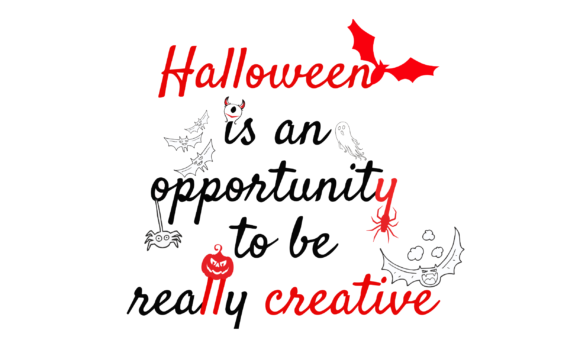
The initial impression of this design is its versatility. The description notes it comes as a high-resolution PNG at 300 dpi with transparent and white backgrounds, allowing you to change the color of every illustration. For an embroidery specialist, this flexibility is gold. It means I am not locked into a specific orange-and-black palette. I can adapt the thread colors to match a boutique brand's specific identity or create a monochromatic look for a sophisticated personalized gift. The layout feels balanced, offering enough negative space to let the typography breathe, which is crucial when translating a digital concept into physical thread.
Real-World Application: The Custom Tote Test
To truly evaluate this piece, I imagined a specific scenario: a local coffee shop wants a limited-run merchandise drop for October. They need something that says "seasonal" without screaming "costume party." I visualized the Halloween is an Opportunity Quote stitched onto a heavy canvas tote bag design. In this context, the quote shines. It transforms a simple carry-all into a statement piece.
If I were executing this as a sweatshirt embroidery project, the design's structure would hold up well against the texture of fleece or French terry. The key here is the clarity of the lettering. In many holiday designs, the text gets lost in decorative swirls or overly dense fills. This design appears to prioritize readability. When a customer sees the finished product, they should immediately grasp the message. If the stitching is too dense, the fabric might pucker; if it is too light, the backing shows through. The ability to manipulate the individual elements suggests I could simplify complex areas to ensure a clean stitch-out on textured fabrics.
Navigating Fabric Challenges and Stitch Density
However, enthusiasm must be tempered with technical reality. Not every surface is ready for this level of detail. If you are planning to use this on a baby embroidery item, such as a onesie or a soft blanket, you must be incredibly careful with stitch density. Babies have sensitive skin, and a heavy saturation of thread can make the garment stiff and uncomfortable. In this case, I would recommend converting certain filled areas into a running stitch outline or using a lighter fill pattern if your digitizing software allows, though since this is provided as a graphic, you may need to rely on a skilled digitizer to convert it properly for machine use.
Similarly, curved surfaces like caps present a unique challenge. The structural integrity of a cap panel can be compromised by large, dense designs. Before committing to a production run of embroidered hats, I would strongly advise testing the design on a scrap piece of the exact same material. Check how the stabilizer interacts with the fabric. A cut-away stabilizer is likely necessary for stretchy knits to prevent distortion over time, while a tear-away might suffice for woven aprons or pillow covers.
Dark fabrics also require strategic thinking. While the transparency of the source file helps in mockups, actual thread does not have an alpha channel. If you are stitching this onto a black hoodie, you cannot rely on the "transparent" parts of the PNG to disappear; you must ensure the design includes no unintended background boxes. Furthermore, light-colored threads on dark fabric may require an underlay stitch to prevent the garment color from peeking through the satin stitch or fill areas, which can alter the perceived color vibrancy.
Commercial Viability for Etsy Sellers and Makers
For the Etsy seller or the owner of a small shop product line, the commercial potential of this design lies in its emotional resonance. Halloween is often associated with fear or gore, but this quote pivots toward creativity and possibility. This opens up a market segment that traditional spooky designs miss: the creative professional, the artist, and the maker. It fits perfectly into a collection of holiday embroidery that focuses on empowerment rather than fright.
When listing this as a handmade product, the presentation is everything. High-quality printable mockup images are essential, but nothing beats photos of the actual stitched item. Show the texture of the thread. Show how the light catches the applique design elements if you choose to incorporate fabric layers. Customers buy trust and quality. If the stitching looks sloppy or the design feels generic, the perceived value drops. However, a clean, well-executed version of Halloween is an Opportunity Quote signals professionalism. It tells the buyer that the creator cares about details.
It is also vital to consider the licensing terms before selling. Since the product is categorized under Crafts and Graphics, verify whether the license permits unlimited commercial sales of physical goods or if there are restrictions on the number of units. Never assume a digital download is free for unrestricted commercial use. Protecting your craft business means respecting intellectual property rights just as much as protecting your own designs.
Final Verdict and Technical Recommendations
In conclusion, the Halloween is an Opportunity Quote is a strong contender for autumn projects, provided it is handled with technical precision. It bridges the gap between seasonal fun and inspirational messaging, making it suitable for a wide range of custom apparel and home decor items.
Before you start stitching, keep these practical notes in mind:
- Test First: Always stitch a sample on scrap fabric identical to your final material to check for puckering or registration issues.
- Contrast Check: Ensure your chosen thread colors provide sufficient contrast against the fabric, especially for the text portions.
- Stabilizer Selection: Match your stabilizer to the fabric weight; do not skimp on support for stretchy materials.
- Detail Inspection: Zoom in on small corners and tight curves. If the design is too intricate for your machine's needle size, simplification may be needed.
- License Confirmation: Double-check the usage rights for commercial sales to avoid legal headaches down the road.
This design is not just a file; it is an opportunity to showcase your skill. Whether you are creating a personalized gift for a friend or stocking inventory for a craft fair, the success of the project depends on how well you adapt this graphic to the physical constraints of embroidery. Treat it with the respect it deserves, and it will reward you with a stunning finished product that customers will love.